MOE统计年鉴
solo_estoy • • 3502 次浏览-
solo_estoy 楼主#1
明年和后年考PSLE的考生人数较少
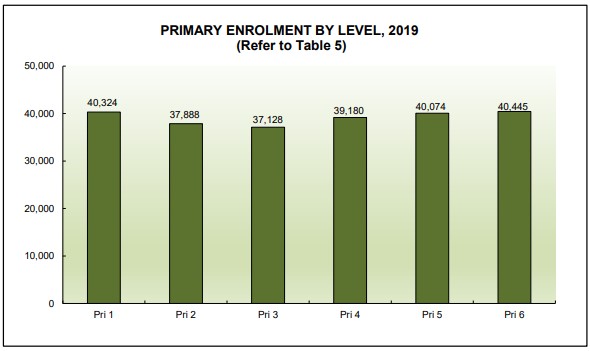
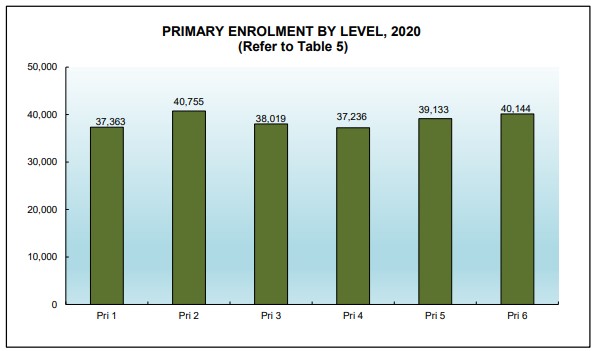
比平均的4万人少了2-3千人
-
solo_estoy 楼主#2
每年小学毕业约四万人
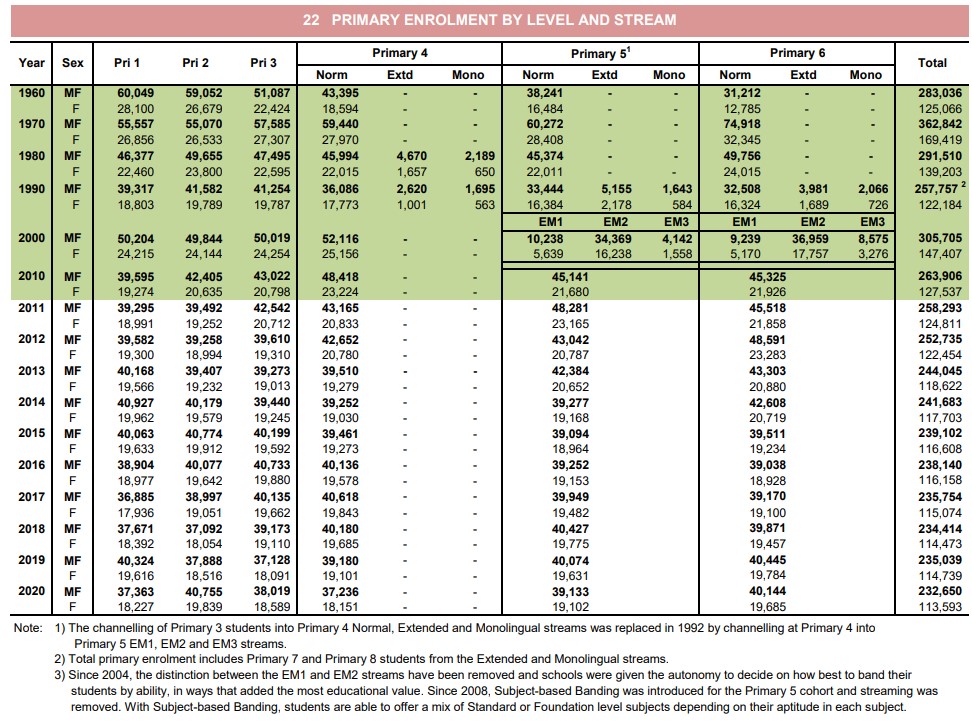
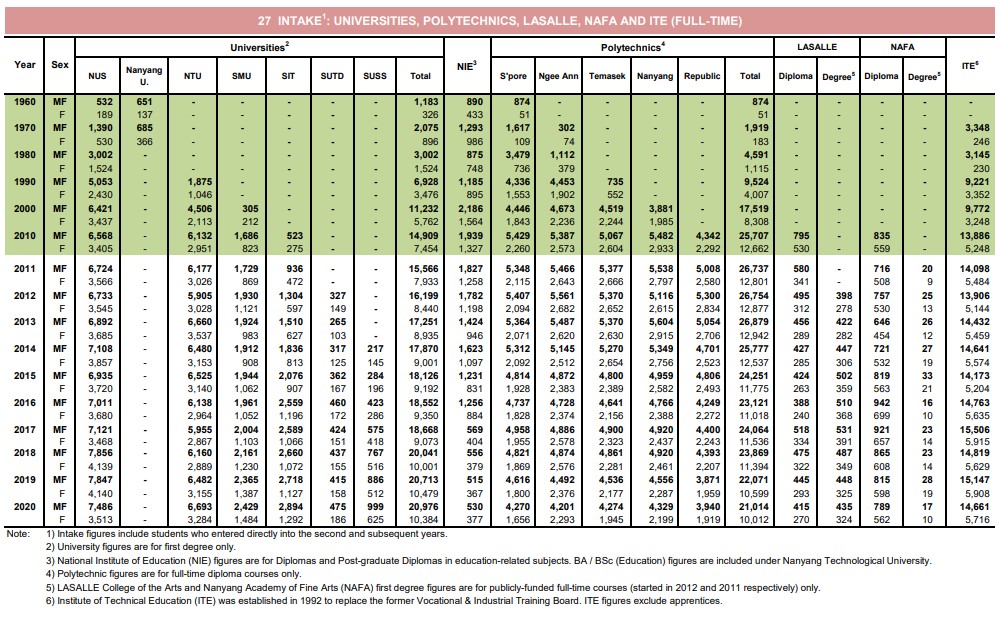
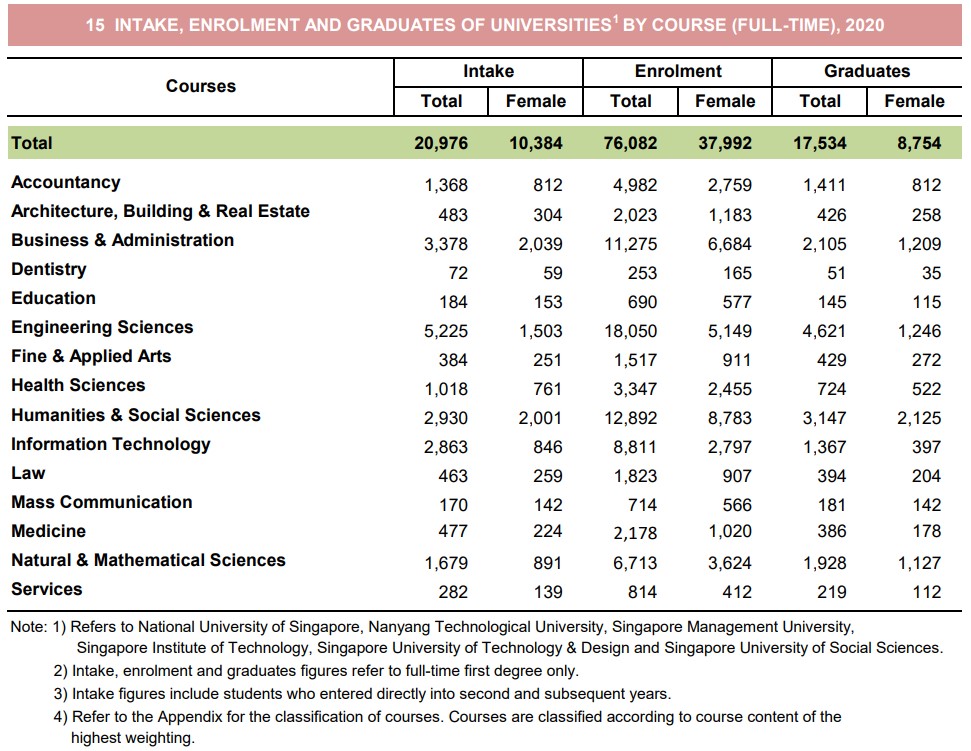
大约40%的人能进NUS, NTU, SMU,加上SIT, SUTD,SUSS就是50%;
其余约50%去poly等,和普高职高的比例差不多
-
solo_estoy 楼主#3
只有2%的人能进法学院和医学院
-
solo_estoy 楼主#4
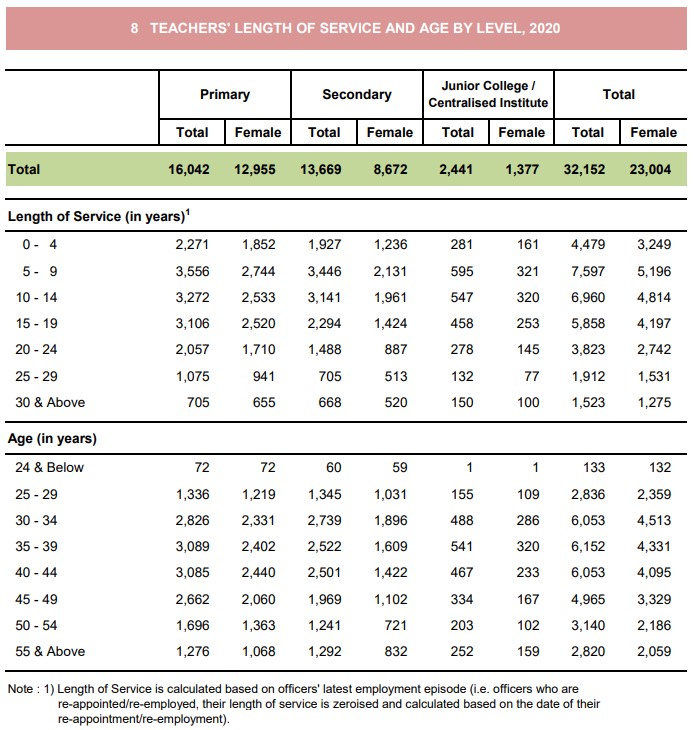
中学老师整体比小学老师稍微年轻一些
-
#5
看的挺仔细啊多分享点谢谢
-
#6
多谢分享干货,出生率好像和生肖有关羊宝宝好像少,然后SG50宝宝估计挤爆
-
solo_estoy 楼主#7
有一点不太确定的是名校是否每年调整收生人数?
否则这一下少了几千人,名校不是容易进多了?祝贺羊宝宝(还有兔宝宝和虎宝宝) -
#8
好图但是你没有算国际学生
nus 加上ntu, 以前sm系列 一年有1000人吧,加上asean 系列,我怀疑国际学生有2000人?
有国际学生的统计吗 -
solo_estoy 楼主#9
-
#10
本地大学入学率就是50%左右了本科生越来越不值钱了,如果读不到好专业,难找到好工作。
-
#11
Sg50 就是羊宝xmlzj
-
solo_estoy 楼主#12
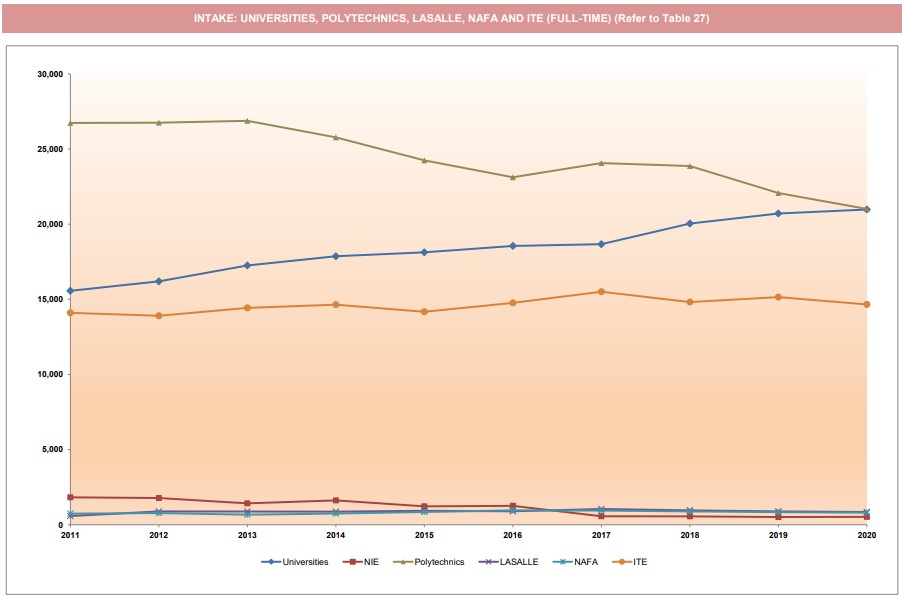
是的,学历通胀Poly人数逐年下降,本科人数逐年上升
-
#13
大学学费贵,多创收。
-
#14
亿老师又在顺口说说了吗?
新加坡管控大学人数,
15/07/13
新加坡总理李显龙指出,国家为人民提供更多上大学机会的同时,也要确保能为学生的发展起增值作用。
新加坡政府估计,大学入学率将从现在的27%,升高到2020年的40%,大学的新生名额将从现有的1万3000个,逐步增加到2020年的1万6000个。
-
#15
十年前2011年你转的新闻2013年八年前的
-
#16
早就扩招了我倒是挺喜欢易老师的,想说啥就说啥,痛快。
-
#17
看来你还真会较劲,这个政策方针是在2011年提出的
李显龙称新加坡大学录取外籍生比例将下调
2012年10月15日10:26 中国新闻网
新加坡本地大学去年有1万2000名学额是给本地学生的。李总理在去年的国庆群众大会宣布,未来四年大学将增加2000个学额,并全部保留给新加坡学生,也就是说到了2015年,每年新加坡籍大学新生总数就能达到1万4000人。
-
solo_estoy 楼主#18
-
solo_estoy 楼主#19
不算打脸,新加坡的CPR相比其他国家还是较低的In the media and policy discourses in Singapore, comparisons have often been made with countries like Taiwan and South Korea to validate the Singapore government’s long time policy approach of maintaining the cohort participation rate ( cpr ) in public universities at around 25% to 30%. Considering the rates of youth unemployment in Taiwan (12.7%) and South Korea (9.5%), where the cpr in universities has hovered around 80% to 90%, it would appear that the problem is one of an over-supply of graduates. While Singapore has maintained a commitment to skills training and to fostering a well-resourced polytechnic sector and the technical and vocational education sector, the government announced in 2012 its plans to raise the country’s cpr in universities to 40% by the year 2020. It established new public-autonomous universities to fulfill this goal, and expanded study places in existing universities, nevertheless with the proviso that internships would central to the curriculum, and that the degrees on offer would be well-tuned to the job shortages in the economy. What policy and political factors explain this change in Singapore’s long-held approach to the cpr for universities, especially when compared to the cases of Taiwan and South Korea? This paper offers an explanation of the policy and politics that underpinned the issue of the number of university places in Singapore, and also an explanation of the Singapore government’s shift in policy in 2012—albeit a policy move that took place within the context and language of the government’s new SkillsFuture programme, in which the education institutions are expected to continue to be well plugged into the needs of industries.
-
#20
那医学院和法学院还是比想象的容易了我当年算是在高考比较容易的省,当时成绩是全省前0.6%左右,才上了理工科录取分前十的学校。
更不用说山东,河南,河北等人口及高考大省,如果想去一线城市,前2%可能都得去一些非985高校。 -
#21
那得是2010年以前,我刚来的时候那时那时候ntu刚扩张,成立很多新学院,后来自从办了几所新大学就开始完蛋了。
我记得2013-2014年的时候,我带本科做FYP,很多一等荣誉学位的本科生去政府部门了,比如ICA/MOE/MOH officer或者Astar,就说明不好找工作了。就好比近些年外企撤资,国内本科生研究生都考公务员和当中小学老师。 -
#22
大家都是在这读过大学的吧。。即使当年20+%的录取率已经有相当一部分人成绩一言难尽了。
不敢想象50%是什么样子,大学课程会不会变更简单?不简单就大量人过不了。。 -
#23
是当年整个cohort 的2% 吧?其实还好,不算很难。
高考大省进985不一定比这个容易 -
#24
985我感觉比这个容易。为啥呢,因为不是新加坡顶尖人才都去申请这些。A-level 4A + 1-2门H3 A的人,大量都出国了。剩下的才会申请医学院、法学院。
并且,我看了一下国大的录取,不用说医学院法学院,国大计算机也录取700-800人,90% percentile都是4A。
加上医学院法学院和出国读名校的,感觉考4A的人相当多了,新加坡A-level考A按比例看,感觉挺容易的。。 -
solo_estoy 楼主#25
是整个cohort985生源好,但是挤破了头教育资源还是不如NUS/NTU
-
#26
我说错了,985可能比这个难大部分省985也都是3%左右,只有上海北京这种的985多一些。
但这比的应该是参加高考的人数,比起上小学的总人数,估计要除以2,也就是说大部分省985肯定不到2%。
同时新加坡这2%中还不是全部,厉害的很多都出国了。 -
solo_estoy 楼主#27
4A很普通啊R和H家一半的人都4A吧
“剩下的才会申请医学院、法学院。”不敢苟同,法学院和医学院在尖子生心中的地位还是很高的,未必是次选。学法和学医还是本地首选,出国次之。 -
solo_estoy 楼主#28
其实没啥可比性13亿人的选拔vs5百万人的选拔,不是一个规格
-
solo_estoy 楼主#29
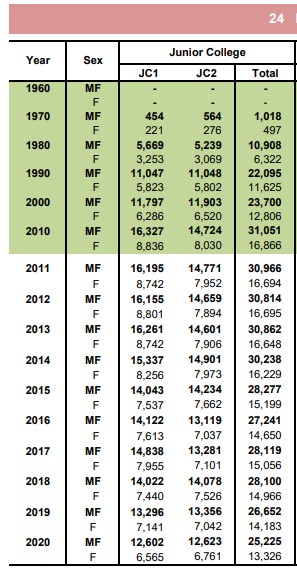
虽说大学入学率已经42%了,JC入学率大约是30%侧面说明大学扩招的都是poly升上来的?
-
solo_estoy 楼主#30
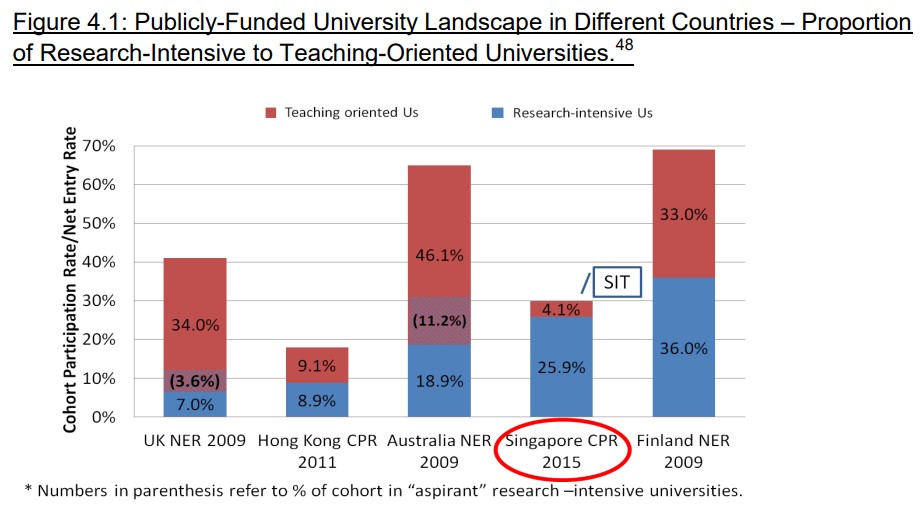
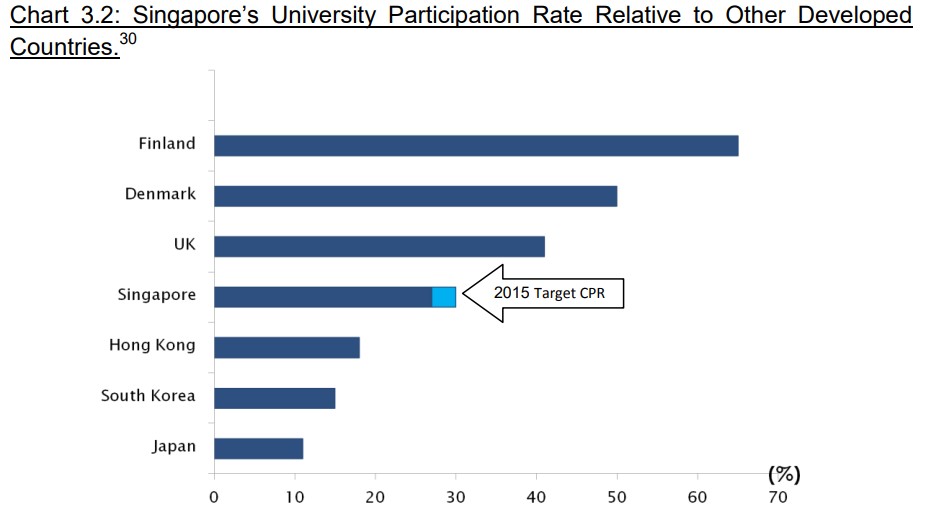
不同国家/地区的大学招生率数据有一点过时,香港居然这么低?
-
solo_estoy 楼主#31
每年约有165名IP学生考不进本地大学https://www.moe.gov.sg/news/parliamentary-replies/20210301-integrated-programme
Around 4,000 Secondary 1 students enter the Integrated Programme (IP) each year, which is roughly 10% of the PSLE cohort. The average class size in IP schools is similar to that of other secondary schools (for IP Years 1 to 4) and JCs (for IP Years 5 and 6).
IP students may obtain the GCE A-Level certificate, International Baccalaureate (IB) Diploma, or NUS High School Diploma at the end of the six-year programme. About 3,300 IP students sat for the 2019 GCE A-Level examination, with similar numbers doing so in 2020. Of the IP students who sat for the GCE A-Level in 2019, more than 95% qualified for our local Autonomous Universities.