20万现金,有什么低风险的理财渠道?
山水 • • 19212 次浏览现在是放在Maybank的saveup account一部分,买政府bond一部分,利息分别是3%和2%。眼看着房贷利息越来越高,打算如果没有好的投资渠道,到后年2月lock-in到期,就先把房贷还了算了。
---
-
#1
投资些实业收益也比银行高
-
#2
我觉得如果锁定 2 年期限,无风险的能拿到 3% 和 2% 的年化利息,已经很不错啦
-
#3
我自己认为现在买小新的政府债是首选。放在房产上还没到时间。
-
#4
如果不能无风险的拿到高于房贷利率的投资回报不如还房贷。
毕竟私宅还有cash out 选项 -
#5
cash out 必须还清贷款吗?想了解一下cash out 如何操作呢
-
#6
好像不需要有兴趣可以找banker了解下。
-
#7
两个选择一:中国太平有三年的储蓄保险,2.32% p.a.,三年到期,保本保息;
二:可以利用银行贷款,买趸交保费的保险,可以终身按月拿钱,就相当于只付首付,从银行贷款买了一套房子,然后把房子出租,每月用房租还利息。有现金的话,同时开一个overdraft account,钱放在里面,贷款利息都不用给了,相当于放在一个利息2.91%的理财产品,而且还有灵活性,没有锁定期。 -
#8
没看明白贷款利息不用给怎么操作?2.91%怎么得来的?
-
#9
2.91%是银行收的贷款利率比如楼主有20万新币,如果支付了20万,这20万就不能挪做它用。但是用银行贷款,可以只付56000,其他部分用银行贷款,贷款利率2.91%p.a. 享受的是20万保费带来的收益。
但是楼主有贷款额144,000, 可以放在一个overdraft account里,这样的话,利息不用付;但是钱有灵活性,有紧急需要或者高回报投资,还可以用。 -
#10
自己找 broker 吧。
-
#11
如果贷款额超过200k,超出部分不就被反撸了2.91%?
-
#12
所以要计划好啊。
-
#13
How You can Start Building a Passive Index ETF Portfolio in SingaporeI have a reader, who first contacted me to ascertain whether the amount she requires to attain the status of Financial Security is correct.
So she has a follow up question, after I helped her with that figure:
I have decided on buying the exchange traded funds (ETF) but I am not sure what’s the process of buying it and which one I should go for. I am thinking of putting one lump sum first before investing a fixed monthly sum. Can you advise me how I should go about doing it? I read some articles online but seem to be very complex and was confused. It seems I also have to sit through some kind of test as well?
This seem to be a common question, judging that it seems to be repeated a lot in other discussion forum, so I thought I will try to address it today.
Her question can be broken up into a few parts:
How to go about setting up to buy and sell exchange traded funds (ETF)?
Which ETF should she purchase?
How should she start of building her ETF portfolio?
Accumulating wealth through ETF is one of the most passive approach to building wealth. Compare to many others, which I find lean closer to active management then passive management.
There are some positives of this method:
Your portfolio is diversified. This guards against the blow up of one specific stock or bonds
Retail investors can readily form a portfolio with the ETFs available in Singapore, Hong Kong and London Stock Exchanges
We do not know whether the future will be the same as the past, but the components that you use to form your portfolio can have a positive expected return. This is important because if you put in an asset A and historically at different rolling periods, the compounded average growth is negative, then why do we invest in something like that?
Exchange traded funds are lower in expense cost then unit trust, investment linked policy (and cost matters a lot in investment)
Exchange traded funds that tracked traditional benchmark indices are not actively managed, and you do not run into the problem of your unit trust fund manager under-performing the benchmark index (because you are buying the index!) and charging you an exorbitant management fee for that
An ETF portfolio is low effort. You need to put in upfront effort to learn how to manage an ETF portfolio, and after that your recurring maintenance effort is to inject capital, re-balance your portfolio and then continue to read up on index investing, behavioral aspect of finance
Like all investments, there are always negatives.
Some of them are:
In terms of available ETF that you can form the core of your portfolio, there isn’t a lot in Singapore. This means that you need to venture to overseas stock exchange such as London Stock Exchange, Hong Kong stock exchange, USA stock exchange, to find these more robust, low cost ETF. Fortunately, your local stock brokers allow you to invest in them
When you venture overseas, you have to contend with dividend withholding taxes. This could shave your returns. You may also have to contend with estate duty or death taxes. For example, if a non-US citizen passes away, there run a likelihood that 50% of his assets will go to the USA government as estate tax (excluding US$60,000). There are inheritance tax in UK as well. There are non in Hong Kong
Future conditions could change. Historical returns in the future may not mirror that in the past
In the short run, the value of your assets can be volatile. And you might not be ready for how volatile it is. So much so that it makes the investor make stupid decisions -
#14
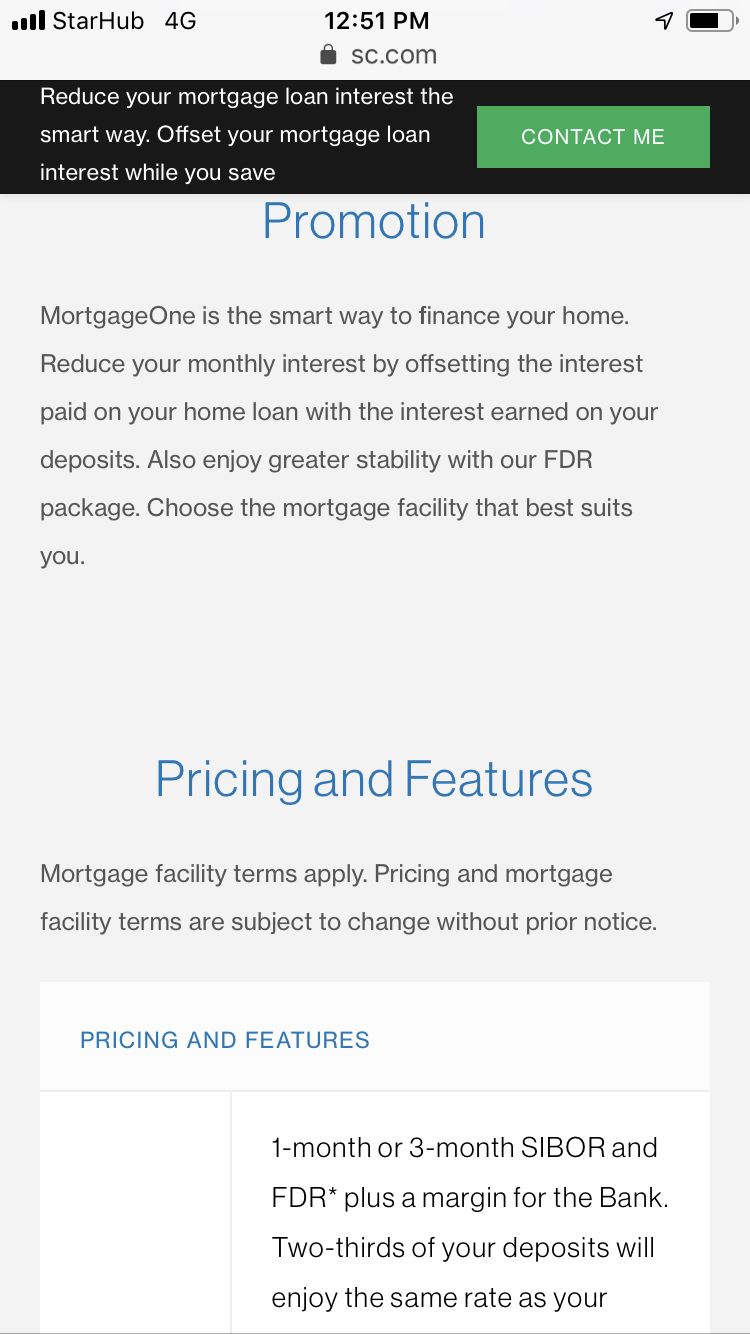
不一定要保险渣打mortgage one早就有这个了,贷款100万,存进去100万,然后就等于不用交房贷利息了。好处就是比较灵活,缺钱了可以拿出来花,没必要把现金都用来买房子。反正就是个左手右手的事
-
#15
没必要买2%的政府bond啊10万dbs,7万5 uob,, 利息也超过2%,而且是随时可取的!政府bond毕竟还得等一个来个月吧。
-
#16
不太懂 随便说说啊买Capital或者OCBC这些大公司的债券怎么样
零售债门槛低,收益应该可以3%
要是风险等级高一点,比如买Oxley的债券,收益可以5% -
#17
currency usd假如是我的话。